
Civism and Mindfulness: A Collective Approach for Society
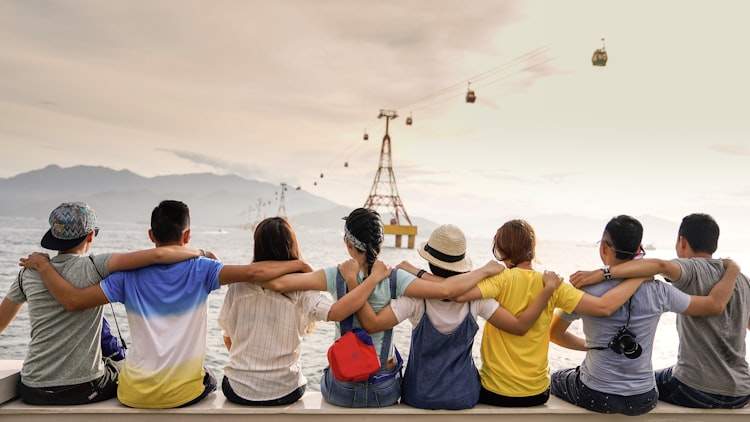
I have spent more than thirty years working at the intersection of inner life and outer world. In that time, I've sat with veterans trying to return to civilian society, with executives whose companies were eating their humanity, with people in recovery from addictions that had swallowed entire decades. What I keep finding, across all of these varied lives, is a single thread: the quality of a person's relationship to themselves shapes, in ways that are direct and measurable, the quality of their relationship to everyone else.
This is not a small observation. It is, I believe, the foundation of something we urgently need to reclaim: a practice of civism, the ethics of engaged, responsible citizenship, that is rooted not in ideology or obligation but in genuine inner development.
Mindfulness has largely been marketed as a personal productivity tool. Reduce stress. Improve focus. Sleep better. These benefits are real. But they are the shallows. The depths of contemplative practice have always pointed somewhere else, toward the recognition that the self is not separate from the world, that what happens inside us radiates outward, and that a society is only as whole as the individuals who compose it.
What Civism Actually Means
Civism is a word that has largely fallen out of everyday use, which is itself telling. It refers to the disposition of the active, engaged citizen, someone who recognizes that their participation in collective life is not optional, not merely a right, but a responsibility. The civically minded person shows up: to their community, to the democratic process, to the project of building a shared world with people who are not like them.
This is not about political affiliation. Civism transcends party. It is about the capacity to hold the tension of difference, to disagree, to debate, to advocate, without collapsing into contempt. And this capacity, I would argue, is not primarily a political skill. It is a psychological and spiritual one. It requires a regulated nervous system. It requires the ability to stay present under pressure. It requires the development of what we might call internal resource, the stable inner ground from which genuine engagement becomes possible.
What erodes civism is not ideological difference. What erodes it is dysregulation. A nervous system that is chronically in threat response cannot hold nuance. It cannot tolerate ambiguity. It cannot stay in relationship with someone who challenges its worldview. Fight, flight, or freeze applies just as much to political discourse as to physical danger. What looks like tribalism and polarization is very often, at its root, collective trauma, millions of dysregulated nervous systems, reacting rather than responding, defending rather than engaging.
The Dysregulated Body Politic
Stephen Porges's Polyvagal Theory gives us a useful map here. When we feel safe, genuinely safe, in our bodies, in our relationships, in our social environment, the social engagement system comes online. We become curious. We can listen. We can be moved by another person's experience without feeling threatened by it. We can disagree without needing the other person to be wrong in a way that diminishes them.
When we don't feel safe, when the system has been shaped by chronic stress, unresolved trauma, economic precarity, or social exclusion, we drop into older, more defensive modes of operation. And from those modes, genuine civic engagement is nearly impossible. You cannot build a common world with someone you have unconsciously categorized as a threat.
This is why the work of inner development is not separate from the work of social change. It is its prerequisite. Not because we retreat from the world into spiritual self-improvement, but because the quality of our engagement with the world depends entirely on what we are engaging from. A person who has done genuine inner work, who has learned to recognize their own reactivity, to regulate their own nervous system, to meet discomfort without immediately defending against it, brings something irreplaceable into civic life. They bring presence. They bring the capacity to actually hear.
Mindfulness as Civic Practice
At the Work Mindfulness Institute, the work we do is grounded in the recognition that mindfulness, properly understood, is not self-improvement. It is self-knowledge in service of relationship. The contemplative traditions from which modern mindfulness draws, Buddhism, Christian mysticism, Sufi practice, the indigenous wisdom lineages, were never primarily about individual wellness. They were about dissolving the illusion of separateness. They were about cultivating the capacity to see the other as real.
A person who sits in meditation and learns to observe their own thoughts without being captured by them is developing a muscle that is directly applicable to civic life. The muscle of non-reactivity. The muscle of staying present with difficulty. The muscle of recognizing that a feeling, even a strong, righteous one, is not the same as a fact. These are not abstract virtues. They are operational capacities. And in a polarized moment, they are exactly what is needed.
Civism practiced as mindfulness looks like this: showing up to a town hall meeting and actually listening before speaking. Engaging with a news story and noticing your body's response before forming a verdict. Recognizing, in a conversation with someone whose politics differ from yours, the moment your nervous system starts to close, and choosing, consciously, to stay open a moment longer than is comfortable.
These are small acts. But they are the actual substance of a functioning society. And they are learnable. That is the hopeful part. We are not asking for a level of virtue that requires extraordinary character. We are asking for a practice, a daily, repeatable discipline of paying attention, that gradually expands the range of what we can hold.
The work I do with individuals, coaching, somatic work, contemplative practice, recovery support, is always, underneath, in service of this larger project. Not because I impose a civic agenda on private healing, but because the healing itself tends to move in this direction. When people learn to be present with themselves, they become more present with others. When they develop compassion for their own suffering, they naturally extend it outward. When they stop defending against their own inner life, they become less hostile toward the inner lives of those around them.
A society of people who have done this work, even partially, imperfectly, in progress, looks different from the one we have now. It is more capable of disagreement without destruction. More capable of building across difference. More capable of the long, slow, unglamorous work that a genuine democracy requires.
That is the collective dimension of mindfulness. And it is why the personal work is never only personal.
Keith W. Fiveson, M.Div., PATP · Contemplative Coach · Work Mindfulness Institute™
Continue the inquiry
Ways to work with these ideas
Continue with support
See whether this work fits your life
Five short questions can help you notice whether contemplative coaching is a useful next step.
See If This Is For You
Contemplative Coach · Work Mindfulness Institute™
Keith W. Fiveson is a contemplative coach who integrates mindfulness, breathwork, somatic awareness, IFS-informed parts work, and narrative inquiry. His work is coaching and can complement care from a licensed therapist or clinician.