Insights
Science · Consciousness · Intention · Interfaith Inquiry
What does it mean to become more aware? Research and contemplative traditions ask this in different ways. Here is room to explore what we can study, what we can practice, and what remains an open question.
The honest position.
The study of consciousness crosses disciplines, from psychology and neuroscience to philosophy and contemplative practice. Each has its own methods, insights, and limits.
Inquiry means taking lived experience seriously without treating every interpretation as an established scientific finding. It also means staying curious where the answers are incomplete.
Not this
Supernatural claims, magical thinking, or the dismissal of evidence that challenges a preferred worldview.
Not this either
A reflexive materialism that treats consciousness as a mere byproduct and dismisses millennia of contemplative evidence as delusion.
This
An intellectually honest engagement with what the evidence shows, what it doesn't show, and why the territory at the intersection of science and spirit is one of the most interesting places a curious person can stand.
A question for our time
What does it mean to become more conscious?
We often talk about intelligence in terms of what we can know or do. But awareness also shapes what we notice, how we understand ourselves, and how we respond to others.
The peer-reviewed research behind the Consciousness Quotient Inventory (CQ-i), coauthored by Ovidiu Brazdău, Keith Fiveson, and colleagues, explores 15 patterns of self-reported conscious experience. It offers a way to investigate human awareness, not a final answer to what consciousness is.
In Keith's work, that inquiry becomes practical: how does greater awareness change the way we live? And as AI becomes more capable, what can the study of human awareness teach us about using it wisely?
What have you begun to notice in yourself that you might once have missed?
Read the 2021 peer-reviewed CQ-i study.
return to the breath
return to the breath
Five Lines of Inquiry
Different questions call for different kinds of evidence. Here is what we can ask without mistaking possibility for proof.
Neuroscience of Contemplation
What we can say
Studies of contemplative practice examine attention, emotion regulation, and the brain. Some report differences associated with meditation, but results vary with the practice, the people studied, and the methods used.
A question worth asking
What changes do people notice in daily life, and how can those observations be studied without reducing the whole experience to a scan?
Mental Rehearsal & Neuroplasticity
What we can say
Mental rehearsal can support learning and performance, especially alongside physical practice. Imagining an action and doing it are not the same thing, but both can be part of how people prepare to act.
A question worth asking
When does a clear intention help us practice differently, and when is action or support from others also necessary?
Quantum Coherence & Consciousness
What we can say
Quantum effects have been investigated in some biological processes. That research does not establish that human awareness causes quantum outcomes, nor does it resolve what consciousness is.
A question worth asking
Scientific surprises can invite better questions without turning a metaphor into a finding.
The Science of Prayer & Intention
What we can say
Prayer and intention have been studied in a range of settings. Claims that intention alone changes distant events or clinical outcomes remain contested; personal meaning, attention, and relationships are different questions worth exploring.
A question worth asking
How does setting an intention change the care we bring to the people and decisions directly in front of us?
Interfaith Convergence
What we can say
Many traditions describe shifts in attention, self-experience, and connection. Their histories, practices, and meanings are not identical, even when some descriptions sound familiar across traditions.
A question worth asking
What can we learn from the similarities while honoring the real differences?
return to the breath
The Sage and the Executive.
What performance cannot reach.
There is a particular kind of stuck that high-performing executives carry, not visible from the outside, not amenable to the tools that built the career. The calendar is full. The decisions are sound. The team is productive. And something essential is quietly going under.
Strategy, optimization, and performance coaching address the outer system. They are necessary and often excellent at what they do. But they cannot reach the place where the questions have changed, where how do I win has quietly become what is this forand where the armor that made you effective in one era of life has become the thing preventing depth in the next.
The archetype that speaks to this moment is not the King, who orders and blesses. Not the Warrior, who acts and protects. It is the Sagethe figure who has traversed enough territory to know what the maps don't show, who holds knowledge without needing to deploy it as power, and who can sit with a person in uncertainty without rushing to resolution.
The Sage does not optimize. The Sage orients.
For the executive who has arrived at that edge, the place where more of the same strategy yields less, where the inner life has been deferred long enough that it is now asserting itself, a different kind of guide is what the moment calls for. Not someone who will help you perform better. Someone who will help you understand what you are performing toward, and whether that destination is still the right one.
Keith carries thirty years at the intersection of systems design, contemplative practice, somatic regulation, and depth psychology. He has spent half a career in the external world of technology, infrastructure, and leadership, and the other half mapping the internal one. That crossing is not incidental. It is the specific preparation for this particular conversation.
"You have succeeded at everything that was supposed to matter. The gap between that and how you actually feel is what this work is for."
return to the breath
Find Nothing.
A serious proposal for what comes after accumulation.
You have spent a career accumulating. Knowledge. Title. Reputation. The particular confidence of someone who has solved hard problems and survived difficult seasons. These are not small things. But at a certain point the accumulation itself becomes the question, not because it was wrong to build it, but because the self that was doing the building starts to ask a different kind of question. Not what else can I acquire? But who is doing the acquiring?
This is where the Buddhist concept of Shunyata enters, not as philosophy but as a practical inquiry. Shunyata is often translated as "emptiness," which sounds like loss. It is closer to the opposite. It is the recognition that the self you have been carrying, the name, the role, the accumulated story, is not the whole thing. Not a fixed entity to be defended or optimized, but a temporary configuration, like a wave on the ocean that is, at every moment, entirely water.
The wave does not disappear when it understands this. It keeps moving. But it stops spending energy pretending to be something other than water. And that, the cessation of that particular effort, is experienced by most people not as diminishment but as relief so large it registers as grief for time spent otherwise.
The contemplative traditions arrived at this territory from different directions. The Buddhist calls it Shunyata. The Christian mystic calls it kenosis, the emptying of self. The Vedantic tradition calls it the recognition of Atman in Brahman: the individual self dissolving into the larger self without ceasing to exist. The neuroscientist describes the temporary dissolution of the default mode network, the brain's self-referential circuitry, during deep meditation or psychedelic experience, and notes that subjects consistently report this dissolution not as terror but as homecoming.
They are pointing at the same territory. The maps differ. The terrain does not.
What mindfulness makes possible, practiced rigorously, over time, not as a productivity tool but as a genuine inquiry, is the ability to step back from the movie of your life and watch it without being entirely inside it. To notice the thoughts without being the thoughts. To feel the feelings without being consumed by them. To hold the role lightly enough that you can put it down when the meeting ends.
This is not detachment. It is presence. The person who knows they are not their role can actually be in the room rather than managing the room's perception of them. The executive who has found this understands something that no leadership development program teaches: that the most powerful thing you can bring to a conversation is a self that doesn't need the conversation to confirm it.
Finding nothing is not the end of the work. It is where the real work begins.
"You are not your thoughts, your memories, your title, or the sum of what you have built. What remains when you set all of that down, even briefly, is worth meeting."
return to the breath
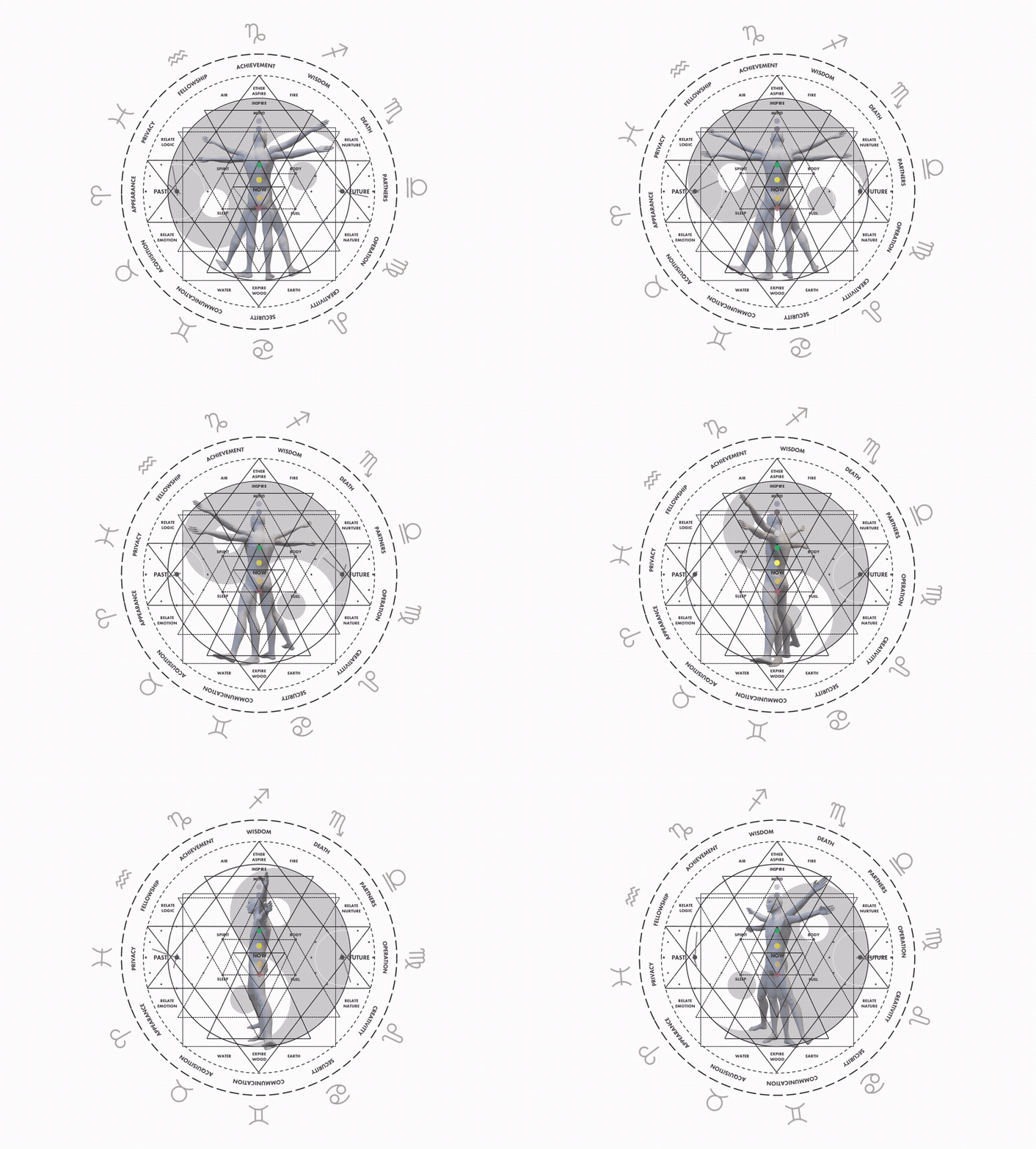
Eight directions of energy.
The same map. Every scale. Body to cosmos.
"We are existing in a universe of changes all happening like a spiral of time in a galaxy of change."
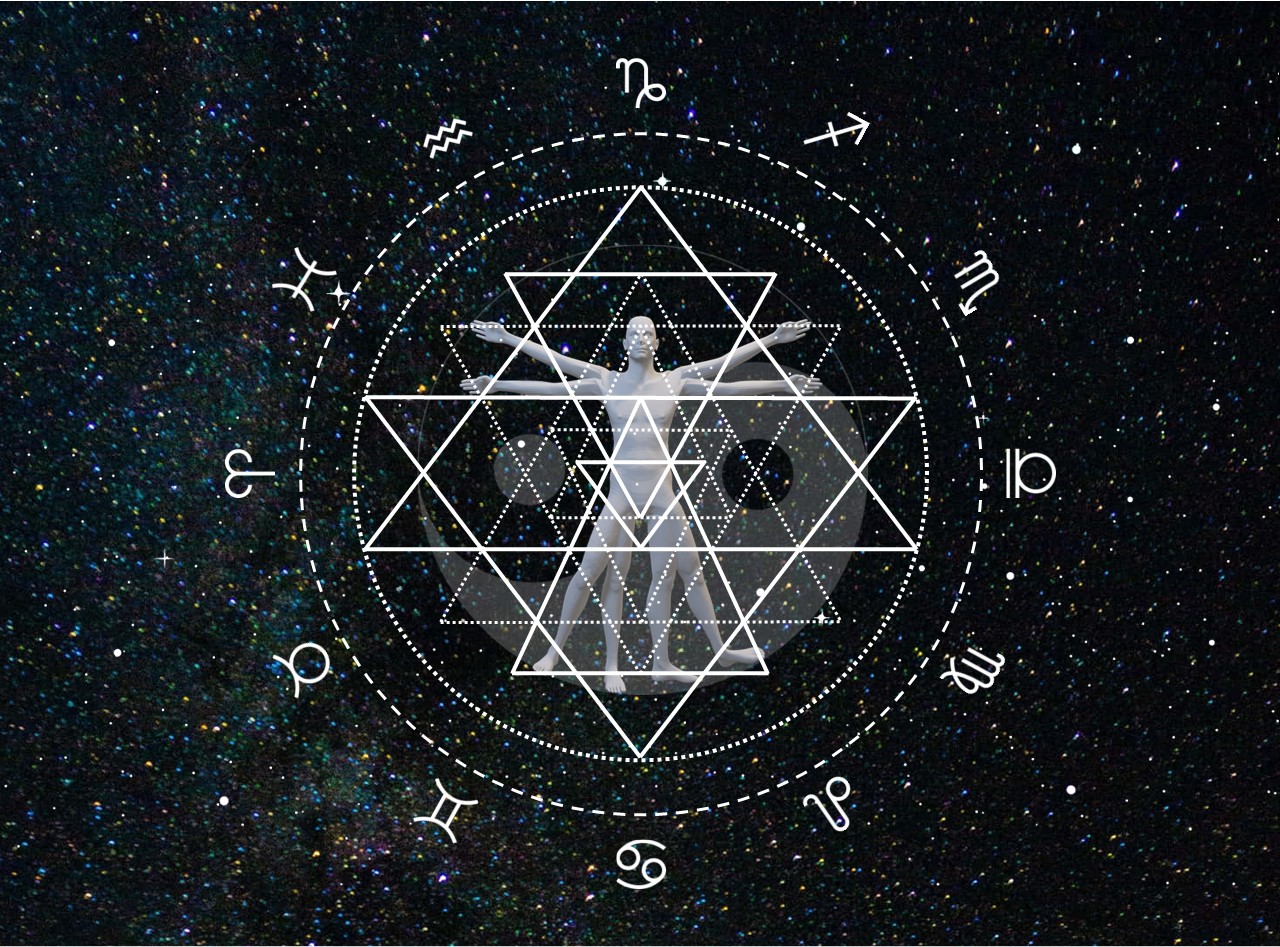
This diagram shows how energy moves through your life. Not in a straight line, but in patterns that unfold across multiple layers at the same time. It reflects movement through your body, your internal world, your relationships, and the larger field you exist within.
The model is organized across eight directions. Four of these are internal. They align with the archetypal energies of King, Warrior, Magician, and Lover. These are not abstract ideas. They shape how you think, act, relate, and take responsibility in your life.
The other four directions are external. They reflect the larger structures that influence and shape you, including nature, the elements, the seasons, and the broader organizing principles of the cosmos. These are not separate from you. They are part of the same system you are moving within.
Together, these eight directions form a complete field. Inner and outer are not separate processes. They move together and influence each other continuously. The same patterns that organize the natural world are active within you.
This is not a new framework. Variations of this structure appear across many traditions, including the zodiac, alchemy, the Tarot, and the medicine wheel. Each offers a different lens, but they are mapping the same underlying terrain.
This diagram makes that structure visible and usable. It helps you see where you are, how energy is moving, and where it may be constrained. From there, the work becomes practical and grounded in direct experience.
From Visualization to Actualization
Attention and intention can help shape practice. They do not guarantee outcomes; they work alongside action, context, and support.
1. Attention
Notice where your attention rests. Repeated patterns of attention can influence what you learn and how you respond, even though change is rarely linear.
2. Intention
An intention can give practice direction. Prayer, meditation, visualization, and ritual offer different ways to return to what matters.
3. Actualization
Bring what you notice into action. Practice may expand what feels possible, while real change also depends on circumstances, relationships, and time.
How this shapes the practice.
Keith holds a Master of Divinity (M.Div.) and decades of contemplative practice alongside a background in systems design and training in somatic work, IFS-informed practice, and psychedelic preparation and integration support. That combination is not accidental.
It means he can sit with a systems engineer discussing the neuroscience of attention and then, in the same session, hold space for a genuine experience of what feels like grace, without needing to reduce either one to the other. Both are real. Both have their place.
For those who want to engage with the science-spirit intersection directly, in coaching, group inquiry, or non-clinical psychedelic preparation and integration support, this is part of the conversation. Not as theology or medical treatment. As inquiry.
Also worth reading
Writing & Articles
Keith's published essays on psychedelic-assisted therapy, sacred plant medicine, and the evolving science of consciousness, originally in Microdose.
"The nitrogen in our DNA, the calcium in our teeth, the iron in our blood, made in the interiors of collapsing stars. We are made of starstuff. The sacred and the material have always been the same thing, looked at from different distances."
Carl Sagan, adapted